Exit-Intent Popup Strategy: Boost Conversions Without Annoying
Have you ever wondered why so many businesses swear by an exit-intent popup strategy when it comes to saving lost visitors? Could it really be that one final nudge before leaving is powerful enough to convert an abandoning customer into a loyal subscriber or even a buyer? The answer is yes—but only if executed correctly. Check out this insightful article on how smart popups help growth.
An exit-intent popup works by detecting when a visitor is about to leave your website—such as moving the mouse toward the browser’s close button or hitting the back button on mobile. At that exact moment, it displays a carefully crafted message offering something of value: a discount, a guide, or even a gentle reminder to complete checkout.
But here’s the catch. A poorly designed popup can frustrate your audience, making them less likely to return. In this article, we’ll break down how to craft the perfect exit-intent popup strategy—covering timing, messaging, best incentives, real-world examples, and industry best practices that will keep your visitors engaged without feeling harassed.


Why Exit-Intent Popups Matter for Conversions
Understanding the Mechanics
An exit-intent popup is a website overlay that appears when a visitor shows signs of leaving. The technology was first popularized in e-commerce to prevent abandoned carts. It uses mouse-tracking scripts on desktop or back-button detection on mobile devices to identify exit intent. Learn more about the technical aspects of an exit-intent popup.
The Benefits of an Exit-Intent Popup Strategy
Reduce bounce rate by re-engaging visitors
Capture abandoning customers’ emails
Offer a last-minute discount to encourage purchase
Promote related content or resources
Improve overall conversion rate with minimal disruption
Crafting the Right Message: Timing, Messaging, Incentives
Timing is Everything
The success of an exit-intent popup strategy depends heavily on when it’s triggered. Displaying it immediately after someone lands on your site is counterproductive. Instead:
On desktop: trigger when the mouse moves toward the top of the browser.
On mobile: use scroll-depth triggers or detect the back button.
Consider adding a time delay so the visitor engages with your site first.
Messaging that Converts (Without Annoying)
The wording of your popup determines whether the user sees it as helpful or disruptive. Best practices include:
Keep copy short, clear, and benefit-driven.
Use friendly, approachable language.
Highlight urgency without being pushy (e.g., “Limited-time offer”).
Match visuals and design to your site branding.
Incentives that Work
A popup is only as strong as the value it provides. The best exit intent popup examples usually feature:
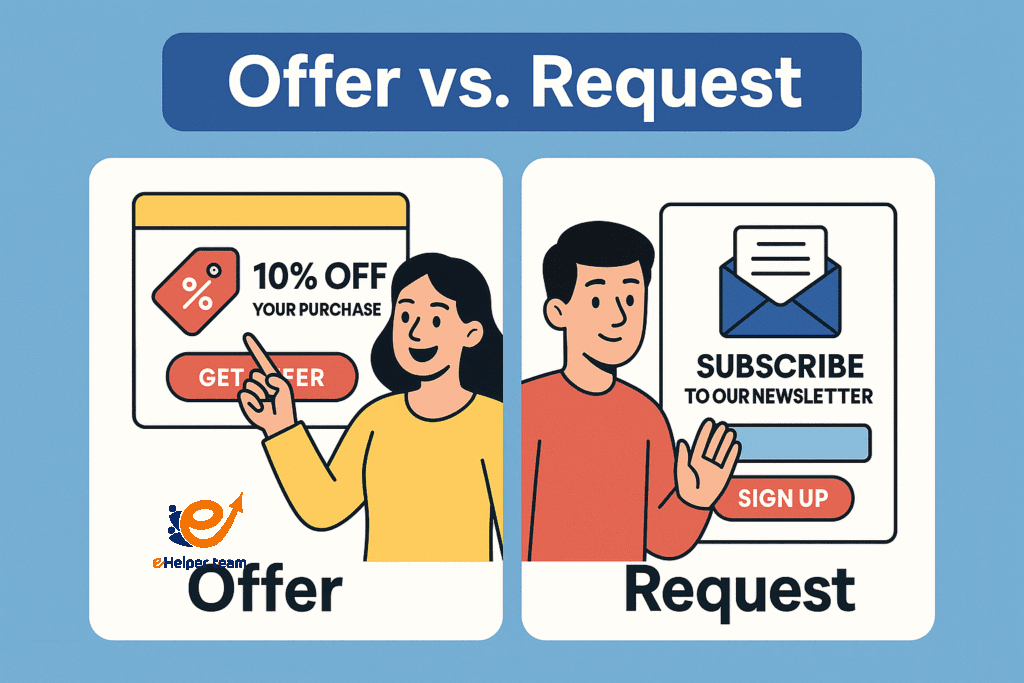
Offering discounts: 10% off or free shipping for first-time buyers.
Capturing emails: exchange an email for a free eGuide or newsletter.
Timing and messaging: combine urgency with relevance.
Examples of high-performing incentives:
“Wait! Get 15% off your first order before you leave.”
“Don’t miss our free eBook—download now.”
“Your cart is still full! Here’s free shipping if you complete checkout today.”
Real-World Examples & Case Study
Examples of Effective Exit Popups
| Example | Incentive Offered | Outcome |
|---|---|---|
| Discount popup | 10% off first purchase | 12% uplift in completed checkouts |
| Email capture | Free downloadable guide | 25% increase in newsletter signups |
| Cart reminder | Free shipping | 18% recovery of abandoned carts |
Mini Case Study
A boutique clothing retailer implemented an exit-intent popup strategy offering 20% off for visitors leaving with items in their cart. Within one month, abandoned cart recovery rose by 27%, and email list growth surged by 35%. The simple combination of timing and incentives made the popup a win-win for both the brand and its customers.
Best Practices & Common Pitfalls
To keep popups effective without damaging customer trust:
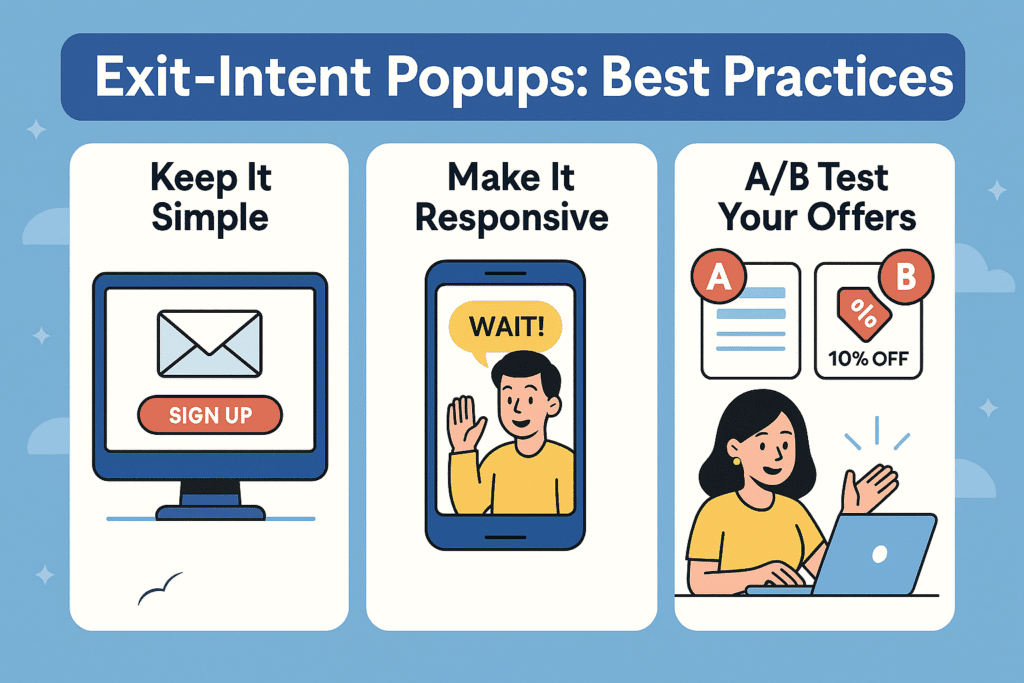
Limit to one popup per session to prevent fatigue.
Don’t block navigation—always provide a visible close button.
Test different variations using A/B testing.
Make popups mobile-friendly.
Track key performance indicators (conversion rate, bounce rate, email captures).
Common mistakes include:
Triggering popups too early.
Using generic, low-value offers.
Designing intrusive, full-screen popups that hide site content.
Implementation Tools & Platforms
You don’t need to build exit-intent technology from scratch. Popular tools make it simple to integrate:
OptinMonster – customizable templates and targeting options.
Sumo – user-friendly with free plans for small websites.
Mailchimp Popups – integrates directly with email campaigns.
For marketers looking to scale, these popups integrate seamlessly into broader marketing automation workflows. See this guide on Comparing Marketing Automation Software for more details.
Best Exit Intent Popup Examples in Action
A skincare brand offering 10% off for email signups—resulting in a double conversion: sale and subscription.
A SaaS company using popups to provide exclusive webinars just before exit.
A travel agency highlighting limited-time seasonal discounts.
Each example shows how timing and messaging must match the customer journey.
Measuring Success of Your Strategy
Key metrics to monitor:
Conversion rate of popup impressions.
Email capture volume.
Coupon redemption rates.
Impact on bounce and exit rates.
Adjust and refine continuously. An effective exit-intent popup strategy is never static—it evolves with user behavior and business goals.
Call to Action
Before we dive into FAQs, here’s one more helpful resource:
For insights on user behavior triggers and optimization, see this detailed industry guide on pop-up optimization.
FAQs About Exit-Intent Popups
Q1: What is an exit-intent popup strategy?
A1: It’s a technique that detects when a user intends to leave a site and displays a targeted popup to encourage retention—through discounts, email capture, or content offers.
Q2: How often should exit-intent popups appear?
A2: Once per session is best. Overexposure reduces effectiveness and annoys users.
Q3: Do exit-intent popups work on mobile?
A3: Yes. Instead of mouse tracking, they rely on back-button detection, scroll depth, or inactivity triggers.
Q4: What offers perform best in popups?
A4: Discounts, free guides, shipping incentives, and exclusive content are proven winners.
Q5: How do I track success?
A5: Use analytics tools to measure impressions, conversions, redemption rates, and impact on bounce rate.
Conclusion
The key to using an exit-intent popup strategy effectively lies in balancing timing, value, and user experience. When implemented with the right incentive and respectful design, popups transform lost traffic into loyal customers. Instead of annoying your audience, you’ll engage them at the perfect moment—when they’re about to leave.
So, are you ready to turn exits into opportunities? Start experimenting with smart exit popups today and watch your conversions climb.